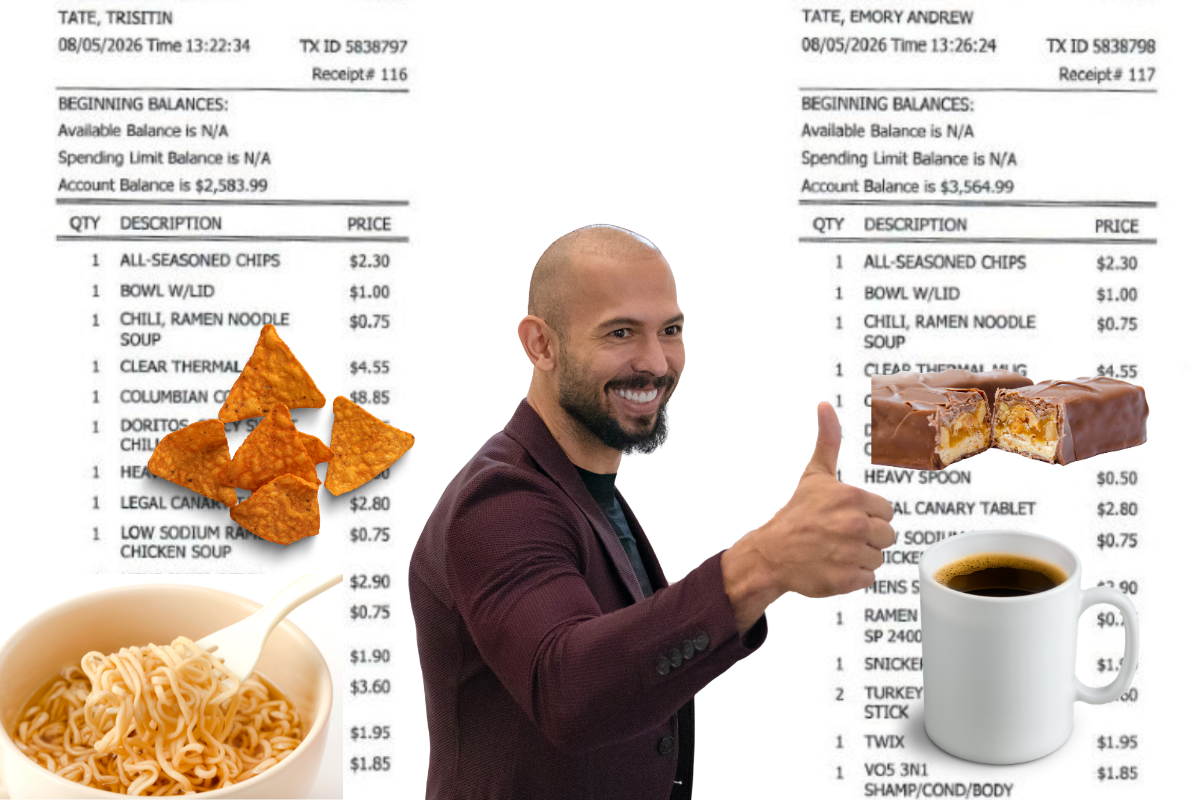
Internet personality Andrew Tate recently claimed that he was denied access to commissary privileges while incarcerated in a Miami-Dade County jail, but the Department of Justice has pushed back by producing actual purchase receipts. According to reports from the Miami New Times, the DOJ presented documentation showing Tate purchased various snacks, ramen, and other standard inmate fare, directly contradicting his assertions about his conditions of confinement in South Florida.
The Dispute Over Jail Conditions in Miami-Dade
When high-profile figures are held in federal custody, their conditions often become a point of public and legal contention. In this instance, the narrative of being deprived of basic commissary access was challenged by hard evidence. The DOJ's submission of receipts serves as a factual counterweight to the claims made by the influencer.
This back-and-forth highlights the intense scrutiny placed on the Federal Detention Center in Downtown Miami, where many high-profile defendants are processed and held. The facility is a central hub for the Southern District of Florida, and the conditions within its walls are frequently debated in local legal circles. Defense attorneys often cite the challenging environment when arguing for bond or home confinement for their clients.
What the Commissary Receipts Actually Show
The items in question are far from luxury goods. The documentation brought forward by the DOJ points to purchases of ramen noodles, packaged snacks, and what can best be described as standard dorm-room fare. In the federal prison system, the commissary is the primary way inmates supplement their standard meals.
Inmates can purchase additional food items, hygiene products, and sometimes basic clothing. The presence of these receipts indicates that the standard ordering process was, in fact, available and utilized. This directly undermines the narrative of total deprivation that was being circulated online and in court filings.
Local publications, including the Miami New Times, have noted the almost comedic contrast between the lavish lifestyle often projected by internet personalities and the stark, processed reality of jail food. The dorm-room fare described in the reports highlights a universal equalizer in the penal system. Whether you are a local resident facing federal charges or an international internet figure, the menu at the FDC commissary remains stubbornly unchanged. It is a world of instant carbohydrates, sugary snacks, and canned meats, a far cry from the vibrant culinary scene found just outside the jail walls in Downtown Miami.
Understanding the Federal Detention Center in Downtown Miami
The facility at the center of this dispute is the Federal Detention Center located in Downtown Miami. This facility is known for housing inmates awaiting trial or sentencing. Conditions at FDC Miami are a frequent topic of discussion among South Florida criminal defense attorneys.
However, the availability of commissary is a standard operational procedure across the Bureau of Prisons. Inmates are typically given a weekly or monthly spending limit and a specific day to place their orders. The food options are heavily processed, shelf-stable items designed to be prepared with hot water from a cell sink or a communal microwave.
The revelation that Tate had access to these items grounds the discussion in the mundane reality of federal incarceration, rather than the sensationalized version often presented on social media. It shows that the basic infrastructure of the jail was functioning as intended for his housing unit.
Why Commissary Access Matters in Legal Proceedings
In federal criminal cases, the conditions of confinement can play a significant role in bail hearings and sentencing arguments. If a defendant can prove they are being subjected to unusually harsh conditions or denied basic privileges, a judge might be more inclined to grant release or adjust the terms of confinement.
By producing the commissary receipts, the DOJ effectively neutralized a potential argument regarding mistreatment or deprivation. It demonstrates that the standard protocols of the Bureau of Prisons were followed. This meticulous record-keeping is a hallmark of the federal system, ensuring that every purchase, from a pack of ramen to a bottle of shampoo, is logged and accounted for.
For the defense, losing this particular argument means they must rely on other factors when advocating for their client's release or better treatment. It also serves as a reminder that the federal justice system operates on documentation and evidence, stripping away curated public narratives and replacing them with the bureaucratic reality of jail life.
FAQ
What is a federal jail commissary in Miami-Dade?
A federal jail commissary is a store within the detention facility where inmates can purchase supplemental food items, hygiene products, and basic necessities using funds from their inmate trust accounts. The food typically consists of shelf-stable, processed items like ramen, snacks, and canned goods.
Where was Andrew Tate held during his time in Miami?
According to reports, he was held at the Federal Detention Center (FDC) located in Downtown Miami, which is the primary federal holding facility for the Southern District of Florida.
Why do commissary receipts matter in federal court?
Commissary receipts provide documented proof of the conditions of confinement. If a defendant claims they are being deprived of basic privileges to argue for bail or better treatment, the DOJ can use these receipts to prove that standard facility protocols and privileges were actively available and utilized.
Source: Miami New Times (link)